
CM80-S3 AND CM80-S4
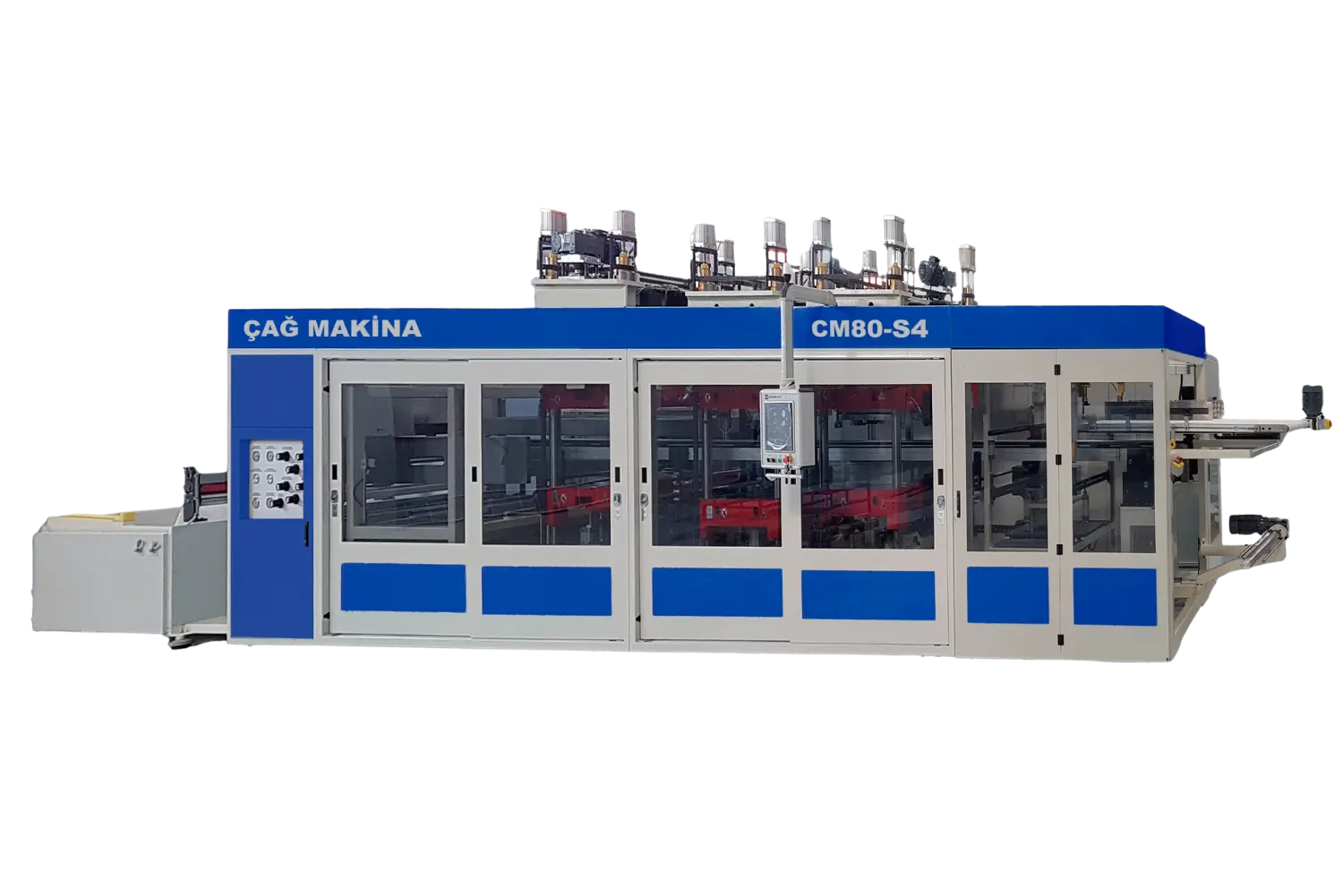
CM80 series thermoforming machines are manufactured in two different configurations, CM85-S4 and CM85-S3, to meet flexible production needs. Both models offer a high-performance production surface with a maximum mold area of 840 x 540 mm and a maximum forming area of 800 x 500 mm.
| Cag Machine Specifications | CM80-S4 | CM80-S3 |
|---|---|---|
| Max. Mold Area | 840x540 mm | |
| Max. Forming Area | 800x500 mm | |
| Maximum Capacity | 65 Cycles | |
| Servo Motor | 5.5 kW (SIEMENS) | |
| Max. Sheet Thickness | 0.20 mm - 1.5 mm | |
| Max. Sheet Width | 900 mm | |
| Raw Materials Used | PP-PET-PS-OPS-PLA-CPET-PVC | |
| Total Heating Power | 140 kW | |
| Average Energy Consumption | 60-70 kW | |
| Total Installed Power | 191 kW | 181 kW |
| Control Panel | 15" Touch Screen - SIEMENS | |
| Sheet Roll Lifting | Ø1200 mm / 1200 kg | |
| Machine Dimensions (L x W x H) | 11000 x 3500 x 2800 mm | 10000 x 3500 x 2800 mm |
| Total Weight | 13000 kg | 10000 kg |
| FORMING STATION | ||
| Top and Bottom Forming Height | 130 mm | |
| Forming Top Precision Adjustment | 100 mm | |
| Clamping Force | 600 kN | |
| PUNCHING STATION | ||
| Punching Station Stroke | 130 mm | |
| Clamping Force (Punching) | 600 kN | |
| Scrap Cleaning Motor | 1.5 kW | |
| CUTTING STATION | ||
| Cutting Station Stroke | 130 mm | |
| Clamping Force (Cutting) | 600 kN | |
| X-Y Blade Cutting Adjustment Motor | 0.24 kW | |
| STACKING STATION | ||
| Conveyor Stroke | 900 x 1200 mm | |
| REQUIREMENTS | ||
| Required Chiller | 40,000 Kcal/h | |
| Required Compressor | 8 m3/min | |
| Vacuum | 200 m3/min | |
| Pressure | 6-8 bar | |
| *Technical values are presented in table format; they may vary according to options. | ||
Why is Thermoforming Machine Compatibility According to Raw Materials Important?
Raw Material Compatibility
The CM100-S4 thermoforming machine is engineered to adapt to production plans involving PET, PP, PS, and PVC plastic sheets.
For businesses with sustainable product goals, it offers a suitable framework for PLA bioplastic-oriented thermoforming applications; final compatibility is verified based on product geometry and process recipes.
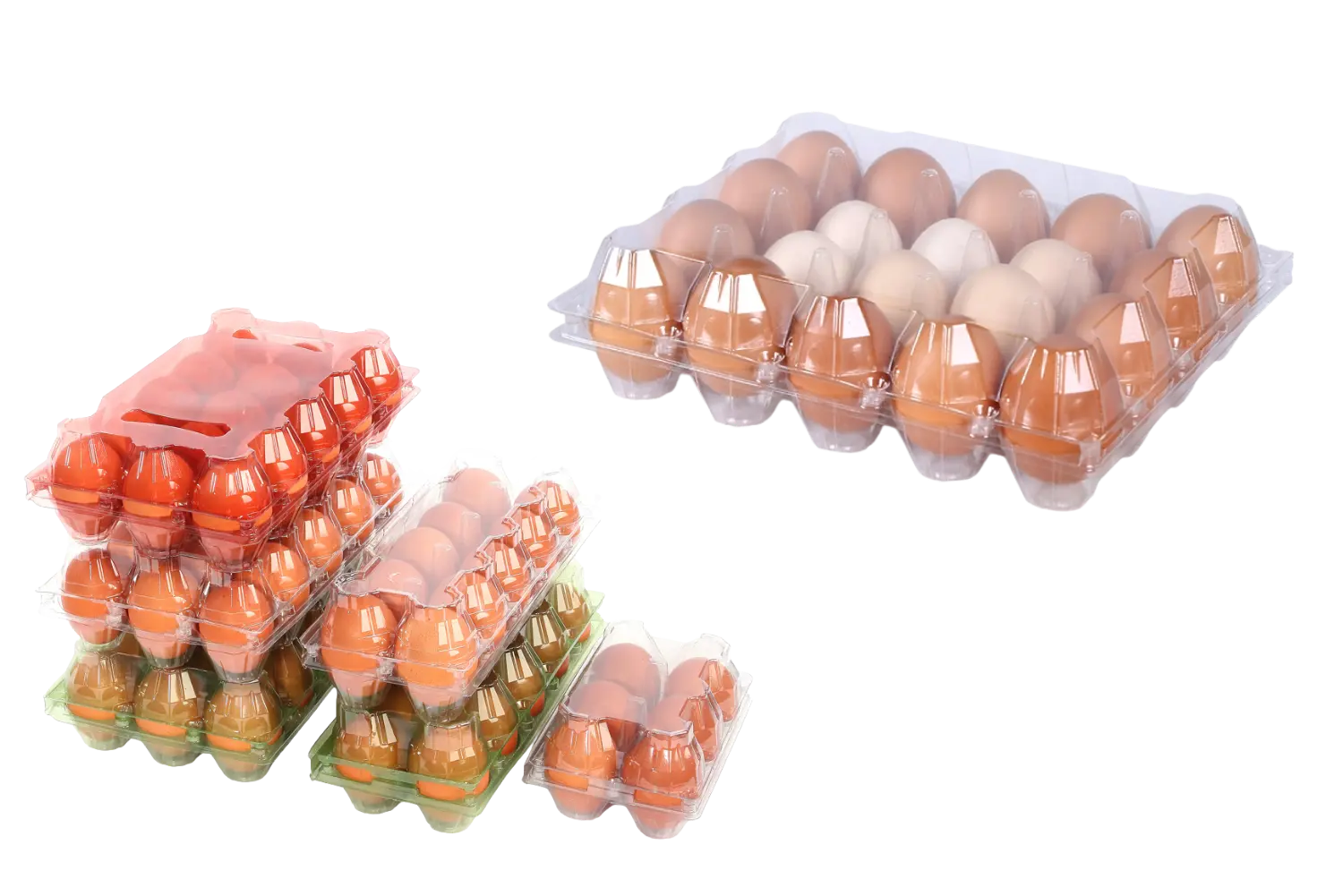
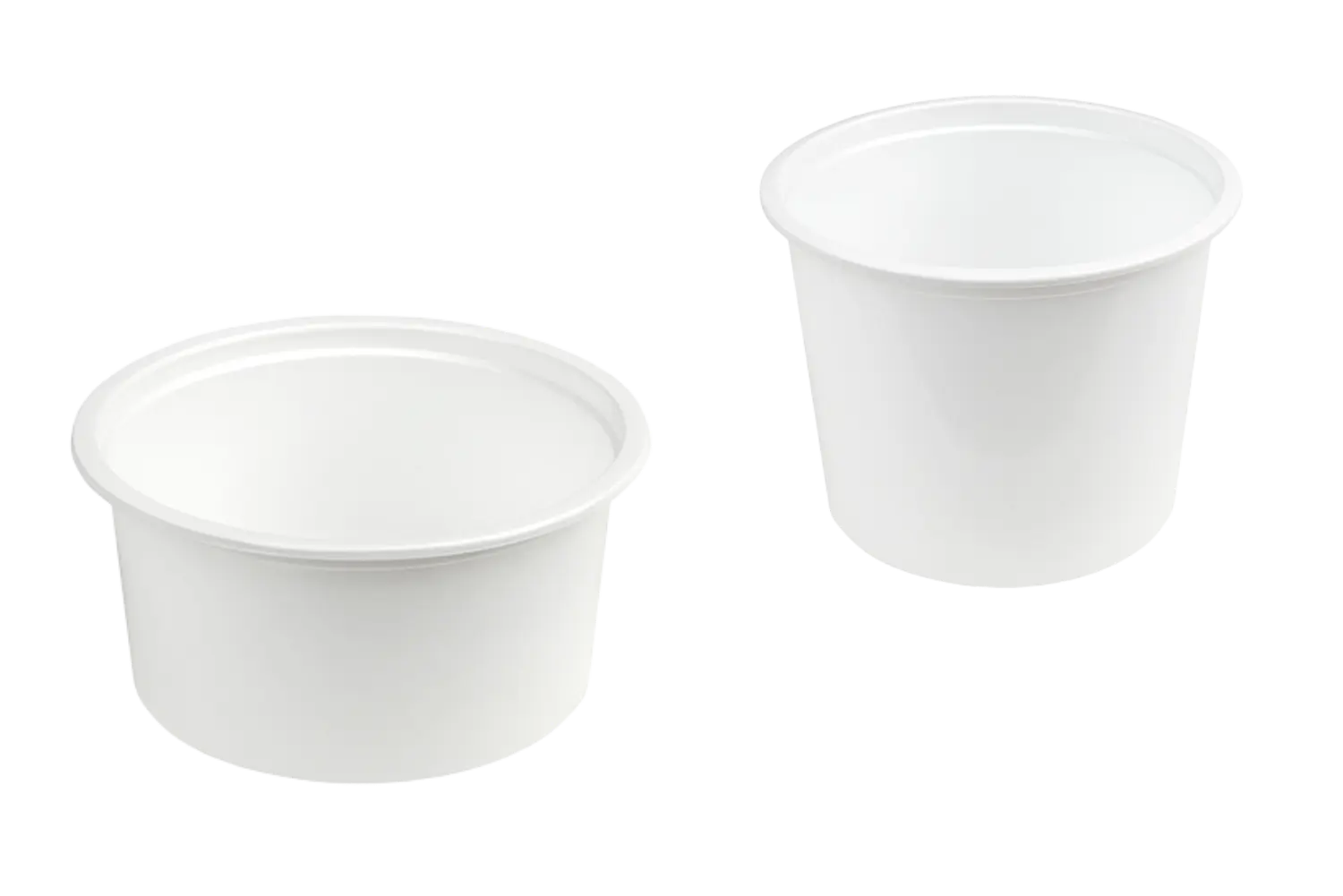
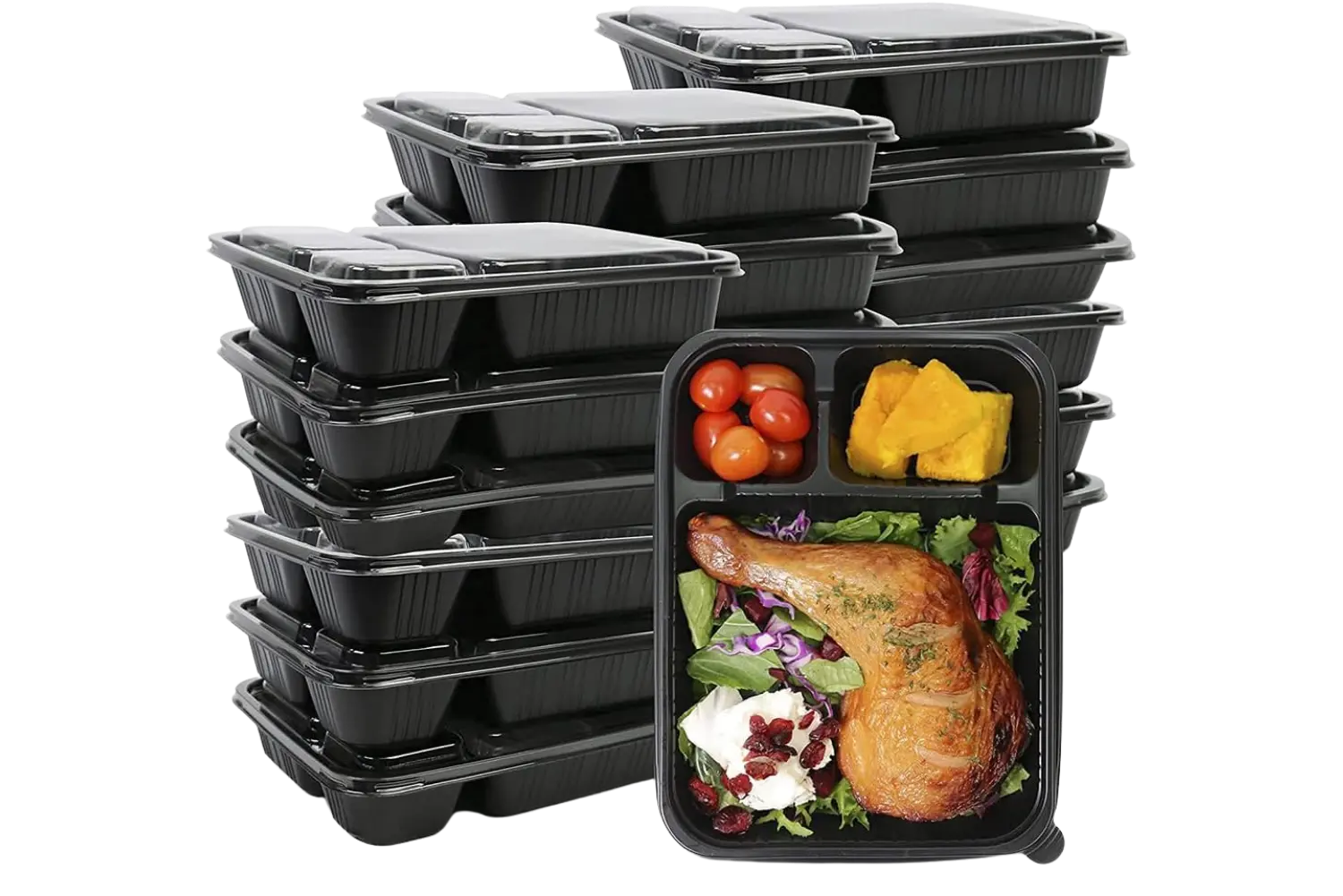
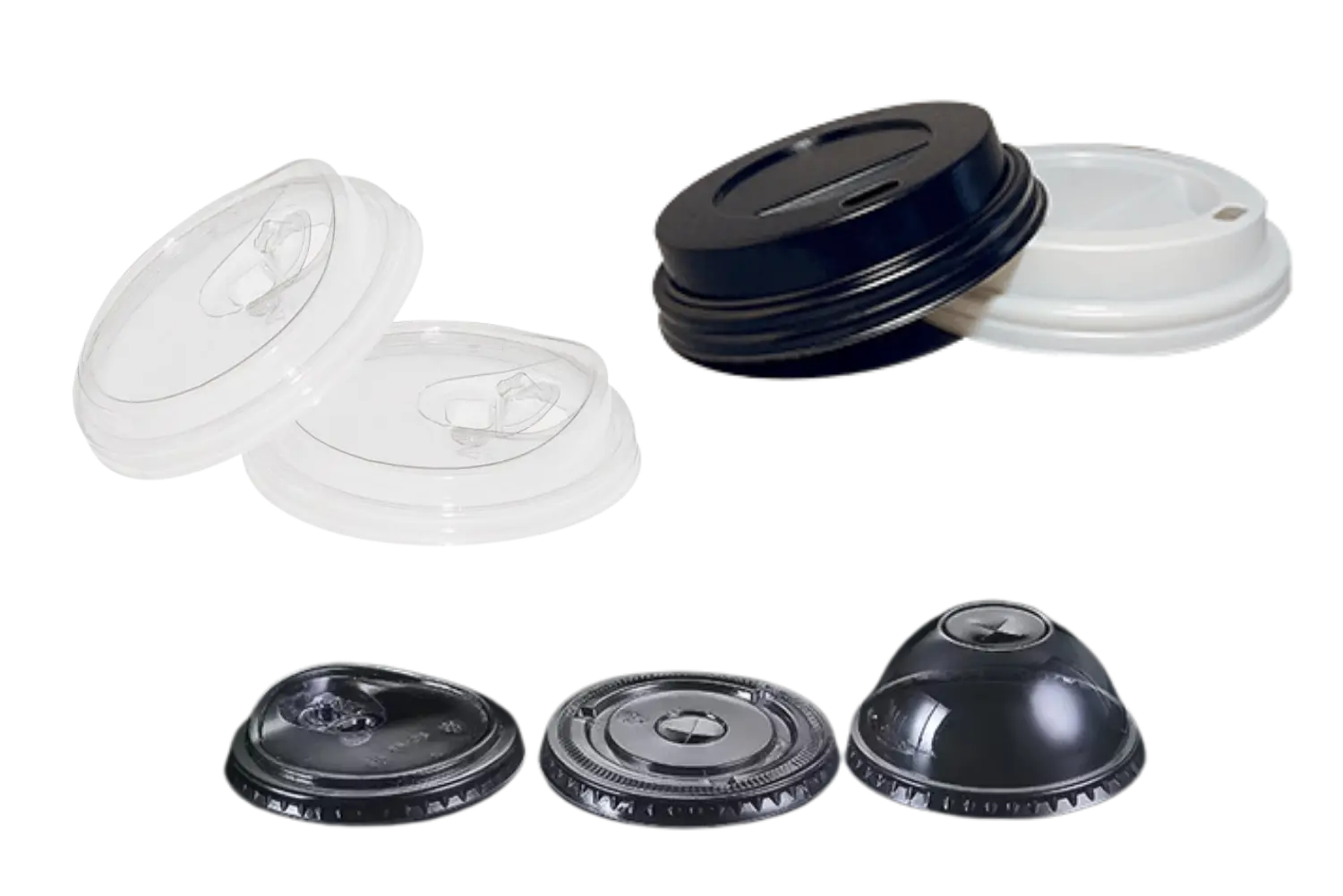
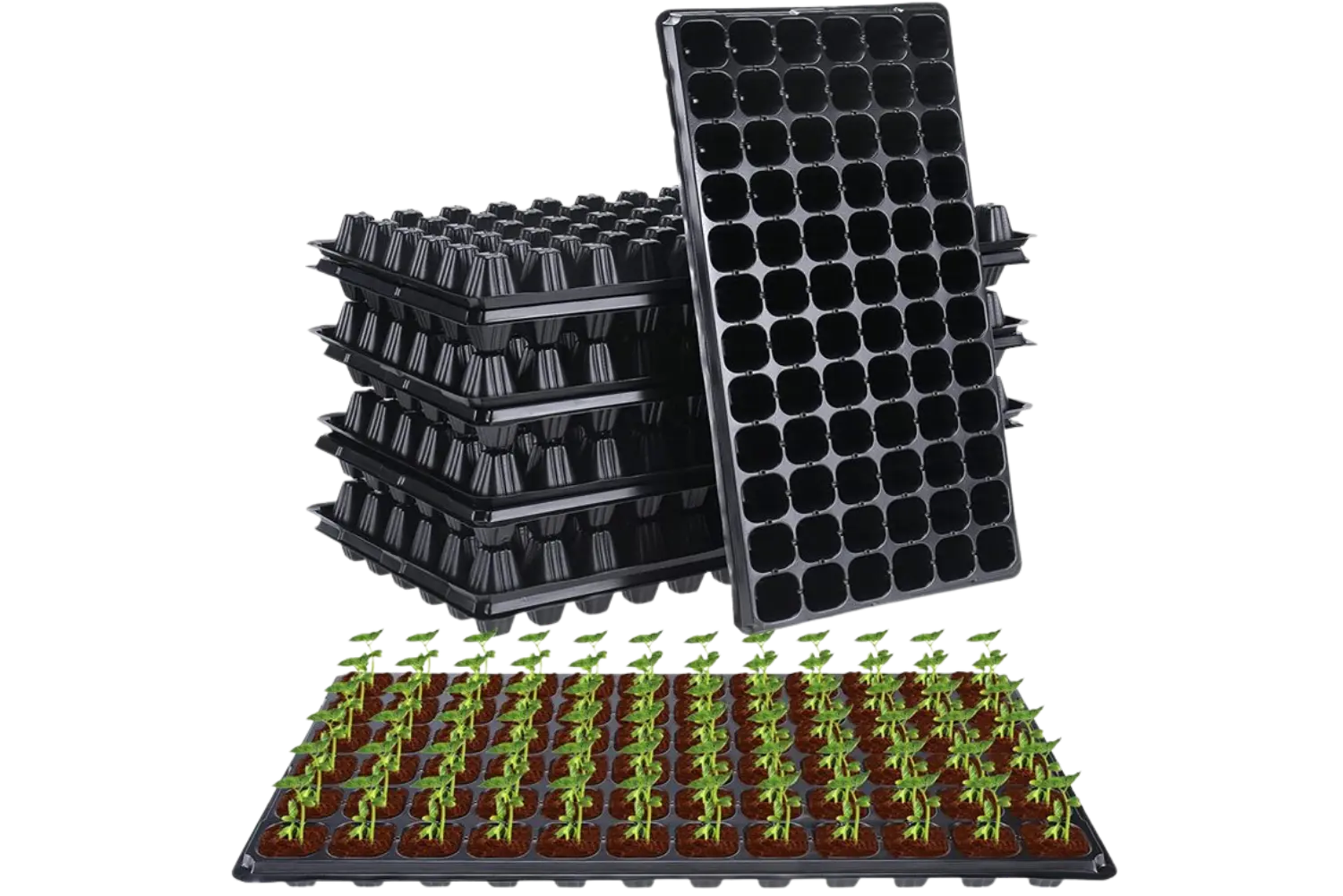
Key Features
- ✓ 4-Station Thermoforming Line: Clear process separation across forming, punching, cutting, and stacking steps.
- ✓ High-Speed Cycle Efficiency: Optimized line flow designed for stable speed targets in mass production.
- ✓ Precision Servo Control System: Production consistent with repeatable movements and recipe discipline.
- ✓ Industry 4.0 Compatible Automation: Parameter traceability and process standardization.
- ✓ Integrated Stacking System: Organized end-of-line output with reduced operator intervention.
- ✓ Material Flexibility: Extensive application framework for PET, PP, PS, PVC, and PLA scenarios.
Quick Summary: The CM80 Series is a powerful solution developed for businesses targeting high cycles, stable quality, low waste, and organized end-of-line flow through its 4-station multi-station structure, bringing together automatic forming, cutting, and stacking processes for PP, PET, PS, and PVC sheets in a single production setup.
CM80 Series Thermoforming Machine: Multi-Station Fully Automatic Production Line
The CM80 Series thermoforming machine is Cag Machine’s specialized multi-station thermoforming machine solution positioned for high-volume food packaging production. For facilities seeking fully automatic 4-station machine solutions for food packaging, it integrates the critical goals of "speed + stable quality + end-of-line organization" into the same workflow. Within the Thermoforming Machines category, this setup offers a strong position, particularly for high-quantity and disciplined production scenarios.
This thermoforming machine setup aims to reduce operator dependency through its 4-station thermoforming line approach, automatic forming and cutting unit, and integrated stacking system.
In facilities seeking High-Capacity Packaging Production, the real need is not just speed, but maintaining that speed throughout the entire shift.
- 65 Cycles High production tempo
- 4-Station Flow Discipline in forming, cutting, and stacking steps
- Low Waste More controlled forming and end-of-line order
For High-Volume Production Lines, the right machine must translate technical values into business results.
- Large Area 840 x 540 mm mold area
- Servo Control Precision motion management with 5.5 kW motors
- Industry 4.0 Strong infrastructure for traceability and recipe management
- Production Focused: 4-station thermoforming line, automatic forming and cutting unit, integrated stacking system.
- Performance Focused: High-speed cycle time targets, precision servo control system, Industry 4.0 compatible automation.
- Process Focused: Vacuum forming, negative/positive forming, chain-driven sheet feeding.
Read More
Why Choose the CM80 Series Thermoforming Machine?
Why Choose the CM80 Series Thermoforming Machine?
What differentiates the CM80 Series as a "thermoforming machine" is the advantage that its 4-station architecture brings to process control. Compared to a 3-station thermoforming line, the 4-station structure offers the advantage of an extra punching or cutting station. This separation makes quality control, edge standardization, and process optimization more predictable. In other words, a correctly configured multi-station thermoforming machine makes bottlenecks visible and accelerates the improvement cycle.
- Control: Helps manage punching/cutting steps more systematically.
- Flow: Provides more organized product output at the end of the line with integrated stacking.
- Yield: Supports sustainable management of cycle times.
What Does Industry 4.0 Compatible Automation Provide?
In production, it's not just "speed" that matters, but the sustainability of that speed. Therefore, the Industry 4.0 compatible automation and precision servo control system approach make thermoforming machine parameters traceable, strengthen recipe consistency, and help reduce operator-induced variability.
But is “high-speed cycle time” enough on its own? No; thermoforming machine performance is managed alongside station synchronization and end-of-line flow.
- Traceability: Monitor thermoforming machine production parameters more closely.
- Repeatability: Maintain recipe discipline for stable quality.
- Operational Ease: Rapid intervention and tracking via the touch panel.
CM80 Series Thermoforming Machine Specifications and Mold Dimensions
The metrics that drive decisions in searches for “CM80 Series thermoforming machine technical specifications and mold dimensions” are mold/forming area, sheet range, and infrastructure requirements. This technical framework provides a practical starting point for choosing the right configuration.
The CM80 Series thermoforming machine is positioned with a maximum mold area of 840 x 540 mm and a maximum forming area of 800 x 500 mm. It operates at a maximum capacity of 65 cycles; driven by 5.5 kW (SIEMENS) servo motors. Sheet thickness ranges from 0.20 – 1.5 mm with a width band of 900 mm.
Technical Selection Guide for Procurement
What accelerates the purchasing decision is being able to read technical data alongside daily production goals in the same table. The following guide consolidates cycle, station count, material compatibility, energy use, and end-of-line flow into a single framework. Thus, you can compare proposals for the CM80 Series not just on price, but on production continuity and operational yield.
When making this evaluation, headings such as Industry 4.0, PLC control unit, energy efficiency under target cycle, automatic stacking and packaging integration for end-of-line, as well as ISO and CE standard production with a 2-year warranty and on-site technical support must be clearly visible in technical documents.
| Checklist Item | Why is it Important? | Key Question for Procurement |
|---|---|---|
| 4-Station Structure | Station separation strengthens process control and makes bottlenecks more visible. | What does the 4-station structure gain in terms of quality and cycle for my specific product? |
| High Cycle Speed | The structure capable of reaching 65 cycles provides a significant tempo advantage in high-volume production. | Under what conditions does the cycle speed remain stable for my target product? |
| Mold and Forming Area | The 840 x 540 mm mold area and 800 x 500 mm forming area are decisive in product family selection. | How compatible are my product dimensions with this working area? |
| Servo Control System | Precision servo structure ensures more stable production during recipe recall. | What advantage does the servo setup offer during product transitions and re-runs? |
| Material Flexibility | Ability to work with different sheets like PP, PET, PS, and PVC expands the investment's scope. | What is the recommended process range and quality limit for my target raw material? |
| Energy Efficiency | Consumption, downtime, and waste together determine the total cost. | Under which production scenario is energy efficiency measured and how does it reflect on unit cost? |
| End-of-Line Flow | Regular stacking and flow prevent bottlenecks at the packaging side. | How is the flow prepared for automatic stacking and packaging integration? |
| Service and Standards | Long-term investment trust is not built solely on machine performance. | How are warranty, on-site support, ISO, and CE headings defined in the proposal? |
Why is Material Compatibility Important in Thermoforming?
Customers often search by raw material rather than “product”: such as “PET packaging production machine” or “PP/PS sheet processing capacity.” Therefore, clarifying material compatibility in thermoforming machine selection significantly shortens the procurement cycle.
How to Setup an Energy-Efficient Thermoforming Approach?
The critical approach to “energy-efficient thermoforming machines in plastic container production” is standardizing recipe management, heating windows, and maintenance discipline after machine selection. A frequently asked question: “How do I balance energy consumption while increasing the cycle rate?” Usually, the first step is making parameters traceable and securing stable quality.
- Recipe Discipline: Standardization of thermoforming machine settings.
- Process Improvement: Optimization of heating and forming windows according to product type.
- Operation: Aligning maintenance routines with production targets.
Quick Comparison with Other Categories
The CM80 Series is a strong option for facilities targeting high-volume and disciplined production in a multi-station flow. Nevertheless, every production target is unique. For deep-formed cup and container production, a different machine architecture might be better; for precise edge quality and low waste expectations, the in-mold cutting approach might become a stronger alternative. Therefore, the right category should be selected based on the character of the production flow, not just the product name.
Tilt-Mold Thermoforming Machines
Stands out for businesses wanting to manage discharge and line flow more controlled through mold movement in deep containers, cups, and similar products.
- Strong production logic for deep-formed products
- Structure suitable for high-speed cup and container production
- Offers different advantages in end-of-line flow
In-Mold Cutting Thermoforming Machines
Should be evaluated separately for businesses seeking cutting precision, smooth edges, and more controlled waste management.
- High-precision cutting approach
- Smooth edge and dimensional repeatability
- Strong results for transparent packaging and critical products
Complete your line with Auxiliary Machines. An efficient thermoforming line does not consist of the main machine alone. Pre-heaters, counting and packaging, collectors, and similar auxiliary systems organize the production flow, reduce operator load, and support the real-world performance of a multi-station line like the CM80.
Frequently Asked Questions
Which Productions is the CM80 Series More Suitable For? +
Why is the CM80 Series Preferred in a 4-Station Structure? +
Which Raw Materials Can Be Processed with the CM80 Series? +
Does the 65-Cycle Speed Give the Same Result for Every Product? +
What Does Industry 4.0 and PLC Control Gain for a Business? +
Why are Auxiliary Machines Important for the CM80 Series? +
How Decisive are Warranty and Support in Procurement? +
Blog
For Technical Support and Inquiries
For technical information requests, you can contact us through our communication channels.
- +90 533 1345807
- info@cagmakina.com
- Zafer Mahallesi 146. Sokak Oz Sefa Is Merkezi No:21/6 Esenyurt Istanbul, TURKEY