
M73-100 and M73-30
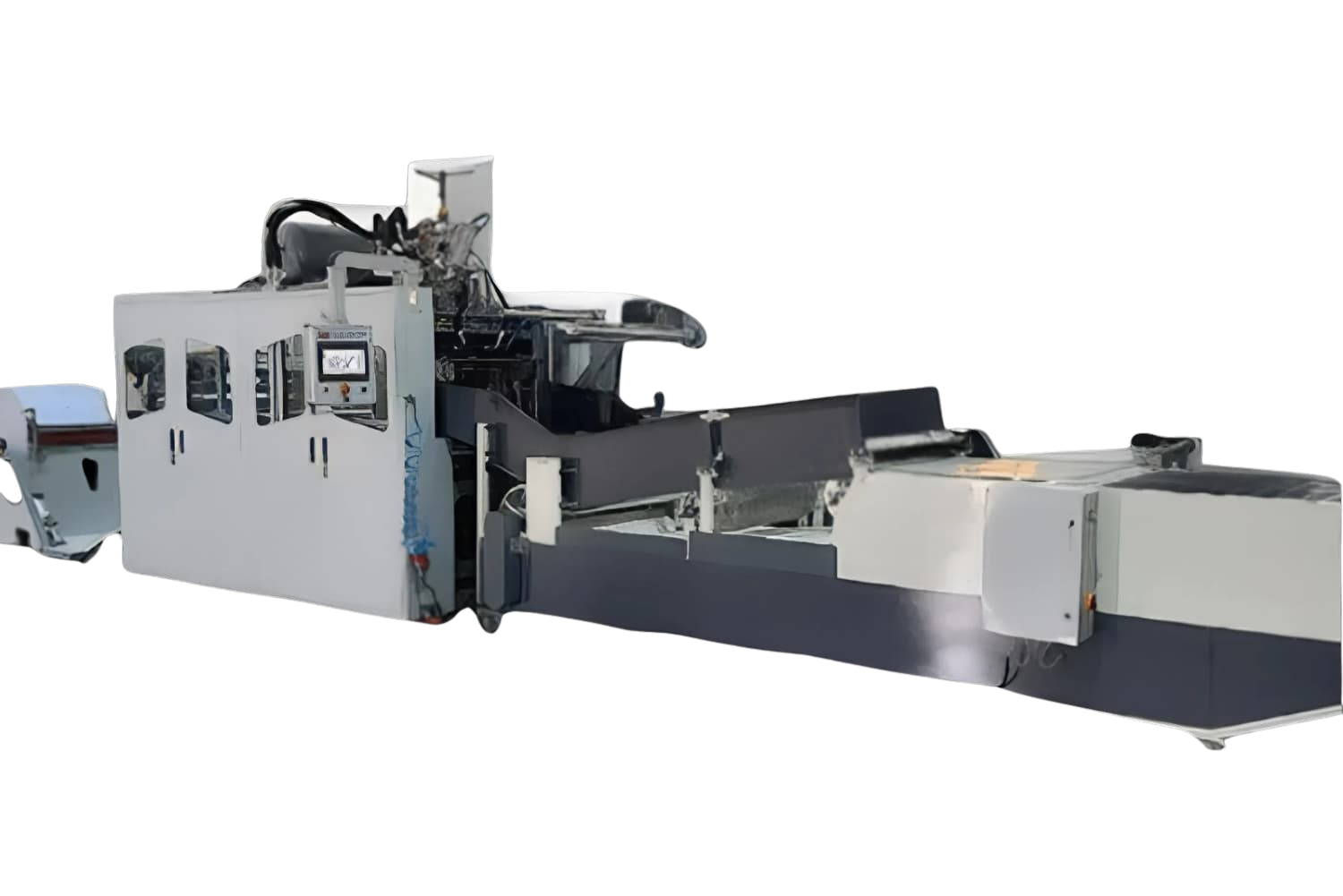
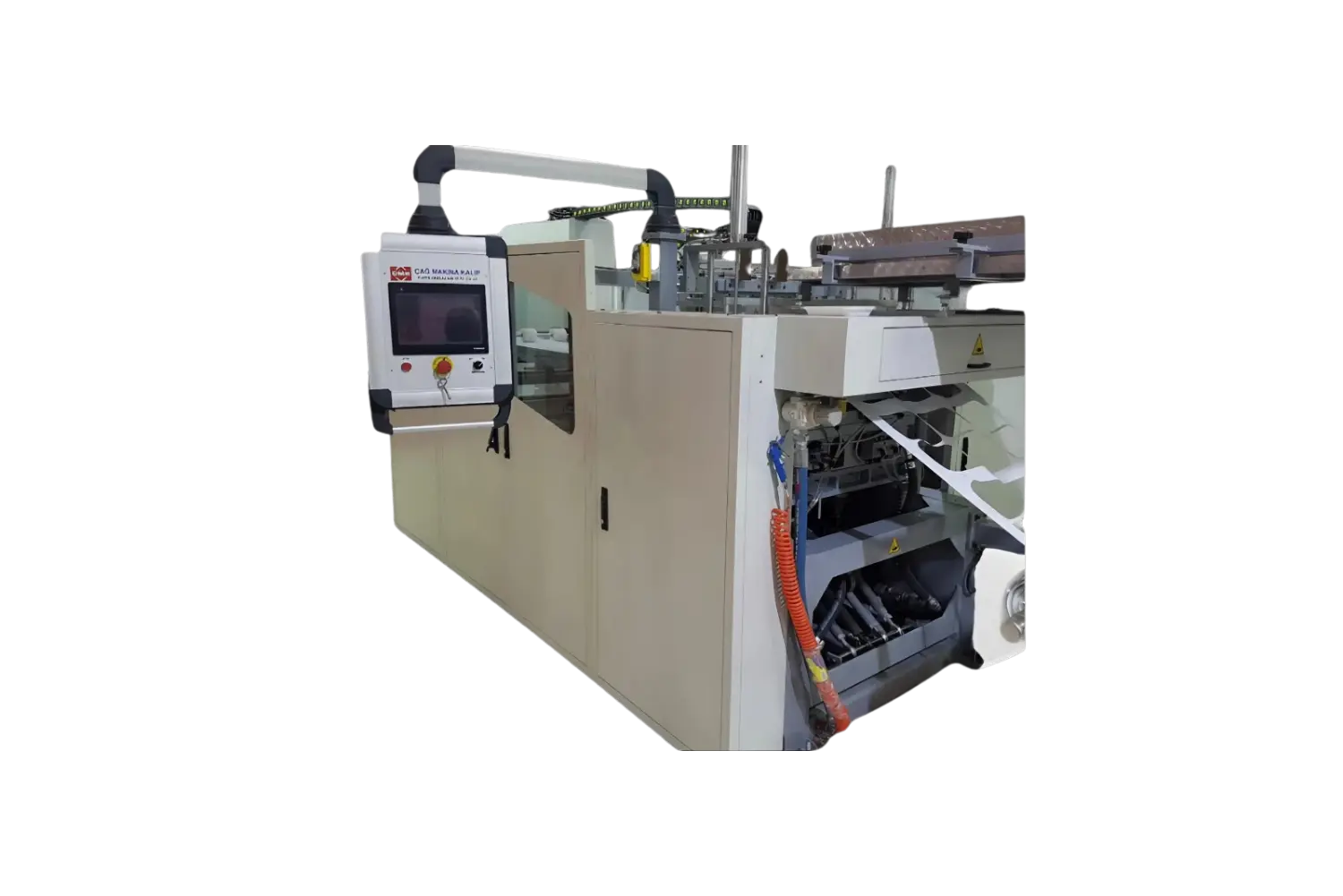
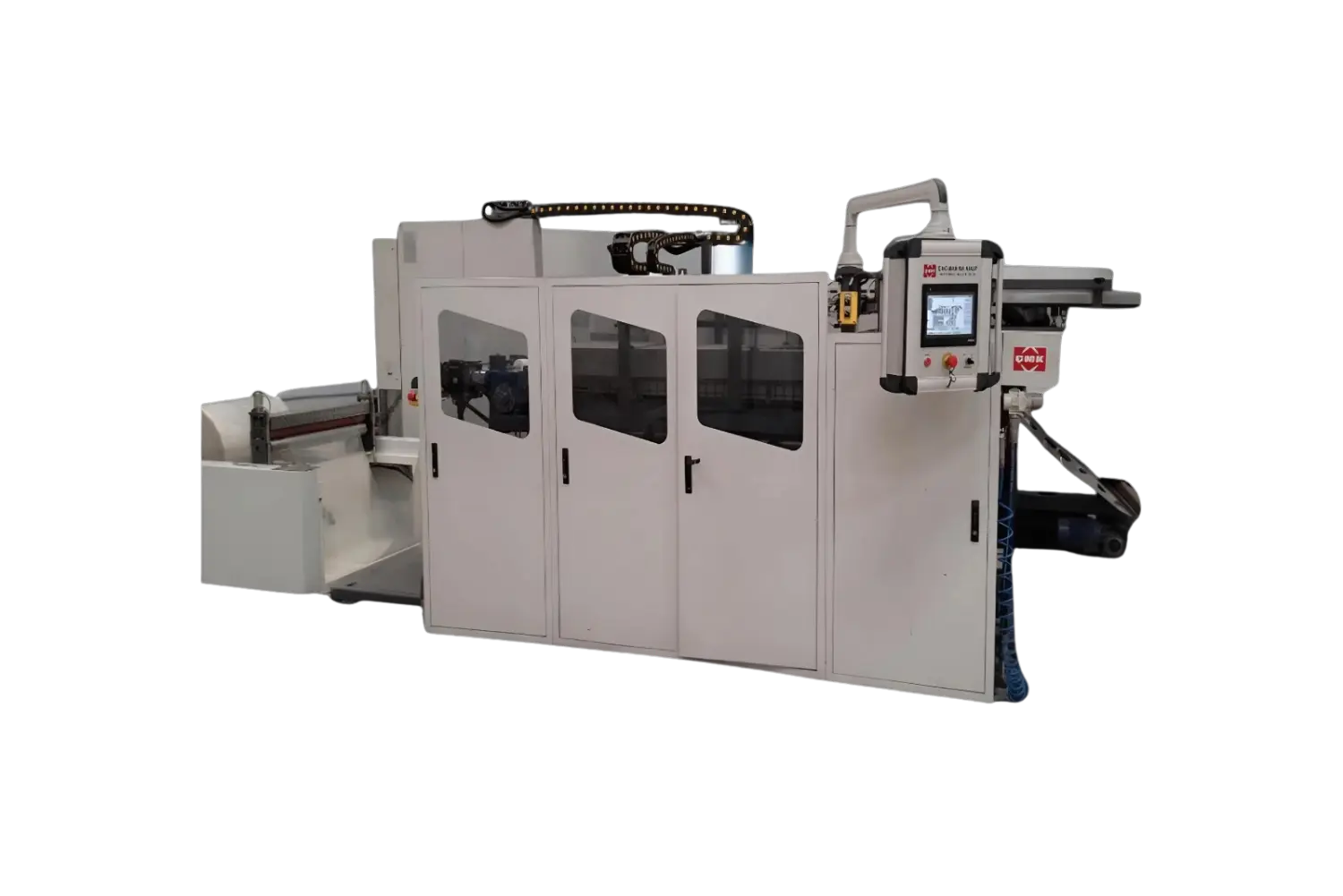
| Cag Machine Specifications | M73-100 | M73-30 |
|---|---|---|
| Maximum Mold Area | 830 x 350 mm | 830 x 350 mm |
| Maximum Forming Area | 730 x 350 mm | 700 x 300 mm |
| Maximum Capacity | 35 Cycles | 30 Cycles |
| Motor | 5.5 kW Inverter Motor | |
| Maximum Sheet Thickness | 1.5 mm | 1.2 mm |
| Maximum Negative Depth | 110 mm (Optional 150 mm) | 25 mm |
| Raw Materials | PP - PET - PS - OPS - PLA - CPET - PVC | |
| Total Energy Consumption | 35 - 40 kW | 35 - 40 kW |
| Total Installed Power | 70 kW | 65 kW |
| Operating Pressure | 8 Bar | |
| Heaters | Ceramix | |
| Dimensions (L x W x H) | 4000 x 2150 x 2300 mm | 3950 x 2100 x 2250 mm |
| Lubrication | Lubrimac | |
| Pneumatics | SMC | |
| *Technical values are presented in table format; they may vary based on options. | ||
Why is Thermoforming Machine Compatibility According to Raw Materials Important?
Key Features
- ✓ Excellent Cutting Precision: Smooth edge quality and lower risk of misalignment thanks to in-mold cutting.
- ✓ High-Speed Cycle: Efficient and rapid production flow by completing forming and cutting in the same process.
- ✓ Compact Machine Design: Shorter machine length and efficient space usage with a process completed in a single station.
- ✓ PET / PP / PVC Material Compatibility: High-precision forming and cutting capability across different packaging scenarios.
Quick Summary: The M73 Series is an in-mold cutting solution developed for businesses seeking smooth edge quality, high-speed cycles, compact design, and precise product repeatability, specifically instilling confidence in PET, PP, and PVC-based packaging production.
M73 Series
The biggest difference of the in-mold cutting approach within Thermoforming Machines is that it cuts the product within the same process after forming, making edge quality more controlled. Therefore, In-Mold Cutting Thermoforming Machines are evaluated as a separate category, especially for businesses looking for smooth edges, dimensional repetition, and product standards. The M73 Series is one of the products that makes this approach more productive, more compact, and more controlled.
For many business owners and technical teams, the real question is: "Will this machine just produce, or will it repeat the same quality every shift?" The M73 series demonstrates its difference here with its in-mold forming and cutting unit, AC motorized cutting system, and compact line configuration. This difference is felt more clearly in PET and PVC packaging forming line investments, where edge quality and cutting accuracy directly affect sales quality.
Excellent Cutting Precision is one of the strongest aspects of this series. Since cutting occurs before the material cools and shrinks, product edges emerge more controlled, and the off-center risk known as "shifted cut" is significantly reduced.
- Cutting Quality Thermoforming solutions with smooth edge finishes
- Accuracy High-precision plastic cutting technology
- Repeatability Maintaining the same edge standard across the same product
When Compact Design and High-Speed Cycles are considered together, the M73 offers not only a high-quality but also an efficient production line. Completing forming and cutting in a single station provides both space savings and speed gains on the cycle side.
- Space Shorter machine length, more efficient factory layout
- Cycle High speed due to reduced transport time between stations
- Integration More organized product flow for automatic stacking and packaging integration
Read More
Why is the M73 Series Preferred?
Why is the M73 Series Preferred?
The reason this machine is preferred is not just that it "can cut." The main advantage is that it protects the product form more securely by managing forming and cutting within the same flow. Especially for materials like PET, whose form behavior becomes more sensitive upon cooling, completing the cut while the product is still in a controlled state creates a major quality advantage. The same applies to PP and specific PVC-based applications, strengthening product standards.
That is why the M73 series is a strong candidate for plastic cups, ayran and yogurt containers, food packaging requiring precise edge finishes, container-bowl groups requiring regular stacking, and productions demanding high repeatability. If you want the product to look beautiful, edge errors to be minimal, and the flow to automation at the end of the line to be seamless, the in-mold cutting logic directly generates value here.
Which Materials and Products Yield Stronger Results?
The M73 series is particularly noteworthy for businesses planning a PET, PP, PS, and PVC packaging forming line, because on such materials, stability during the cut directly affects visual quality and dimensional consistency. Additionally, high efficiency can be achieved in PP-based applications when product geometry and recipes are correctly configured. The question technical teams should ask here is not "Which material does the machine process?" but "Which material does it repeat which quality standard with how much stability?"
Suitable Product Groups
- Container production
- Yogurt, dessert, sauce, and similar food containers
- Transparent packaging and presentation-focused containers
- Blister-like products where cutting precision is vital
Operational Advantages Provided to the Business
- Lower offset/shifted cut risk
- More organized product output and stacking
- More compact line layout
- More measurable quality control process
Technical Selection Guide for Procurement
What truly facilitates the procurement decision is relating technical data to daily production results. The table below clarifies which questions should be asked first for an in-mold cutting machine like the M73 by gathering capacity, waste, energy, quality, and service headings into a single framework.
While making this assessment, one must see how Industry 4.0 approach, PLC control unit, energy efficiency under target cycles, automatic stacking and packaging integration for the end-of-line, and production in compliance with ISO and CE standards with 2-year warranty and on-site technical support are presented in quotes and documents.
| Control Heading | Why is it Important? | Key Question for Procurement |
|---|---|---|
| In-Mold Cutting Precision | Edge quality and product standards are directly tied to this. | How is the cutting logic that reduces off-center risk verified for which products? |
| PET, PP, PS, and PVC Compatibility | Material behavior affects product form and cutting results. | What is the recommended process range and quality limit for my target material? |
| Cycle Speed | Speed is valuable not alone, but when sustained without quality degradation. | Under what conditions does cycle speed remain stable for my target product? |
| Compact Design | Has a direct impact on factory layout and operator flow. | How much space advantage does the machine layout provide in my existing production area? |
| Automation and End-of-Line Flow | Organized output facilitates stacking and packaging integration. | With what logic is product flow organized for end-of-line automation? |
| Energy Efficiency | Consumption, downtime, and waste together form the total cost. | In which scenario is energy consumption measured, and how does it reflect on cost per product? |
| Service and Standards | Long-term investment trust is not formed by performance alone. | How are warranty, on-site support, ISO, and CE headings defined in the quote? |
Brief Comparison with Other Thermoforming Machine Types
The in-mold cutting approach stands out in terms of edge quality, dimensional consistency, and the ability to reproduce the product in the same form. Conversely, the production goal may sometimes not just be precision cutting. For facilities wanting to set up higher volume and station-based flows, a different category becomes more logical, while businesses wanting to optimize product discharge and line order via mold movement may prefer another architecture.
Multi-Station Thermoforming Machines
Suitable for businesses wanting to scale steps such as forming, cutting, and stacking with a station logic. Provides a powerful solution especially when cycle discipline and line flow are prioritized in high-volume production.
- Station-based flow in high-volume production
- Cycle stability in mass production
- Structure supporting end-of-line order
Tilt Mold Thermoforming Machines
Stands out for businesses wanting to manage product discharge and process flow more controlably via mold movement. Can provide advantages especially in organized product output and end-of-line automation goals.
- Controlled product discharge with tilting motion
- More organized flow for end-of-line automation
- Support in reducing waste risk for specific products
Complete Your Line with Auxiliary Machines
Real efficiency in an in-mold cutting line is not limited only to the performance of the main machine. Especially in the product output order, counting, transport, and packaging side, the flow must not be broken as it directly affects total production quality. Therefore, the Auxiliary Machines category assumes a complementary role in systems working with a precision production logic like the M73 series.
An uninterrupted production line consists of more than just the main machine. Pre-heaters, counting and packaging units, collector systems, and other auxiliary equipment make product flow more regular, reduce operator load, and support end-of-line performance. Especially in facilities where automatic stacking and packaging integration is planned, auxiliary machines must be considered along with the main system.
Frequently Asked Questions
What Does an In-Mold Cutting Thermoforming Machine Do? +
In Which Products is the M73 Series More Advantageous? +
Why is In-Mold Cutting Preferred for PET and PP Materials? +
Why are Smooth Edge Finished Thermoforming Solutions Important? +
What Does a Compact Design Gain for the Business? +
Why are Auxiliary Machines Important for the M73 Series? +
Why are Industry 4.0 and PLC Control Units Important for Procurement? +
How Should Energy Efficiency and End-of-Line Automation be Evaluated Together? +
Why are Warranty, Service, and Standards Critical? +
Blog
For Technical Support and Inquiries
For technical information requests, you can contact us through our communication channels.
- +90 533 1345807
- info@cagmakina.com
- Zafer Mahallesi 146. Sokak Oz Sefa Is Merkezi No:21/6 Esenyurt Istanbul, TURKEY